

Travel Your Way
Beijing Food Guide: Flavours, Neighbourhoods & Thoughtful Ordering
Go beyond a roast-duck photograph and plan meals that fit your appetite, dietary requirements and travel route.
The Short Answer
Build a Beijing food experience around one main meal and a few purposeful tastes, not an endless list of snacks. Consider roast duck, zhajiangmian and other dishes in context, confirm ingredients directly and make food inclusions and budgets explicit before booking.
1. Food should help you understand the city
A good Beijing food journey is not simply a contest to try the most dishes. It can explore how a meal is served, how people share food and how a neighbourhood's commercial life connects to its dining places. Choose a theme and leave enough time to enjoy a dish rather than rushing between disconnected stops.
Beijing's official Beijing official food guide: autumn dishes introduces dishes such as roast duck and hotpot in their local dining context. Named restaurants in a public guide are not evidence of a Jingbound partnership, current availability or a guaranteed menu. This article focuses on what to consider when choosing a meal, not on awarding unverified rankings or promising a table.
2. Roast duck: make it a proper meal
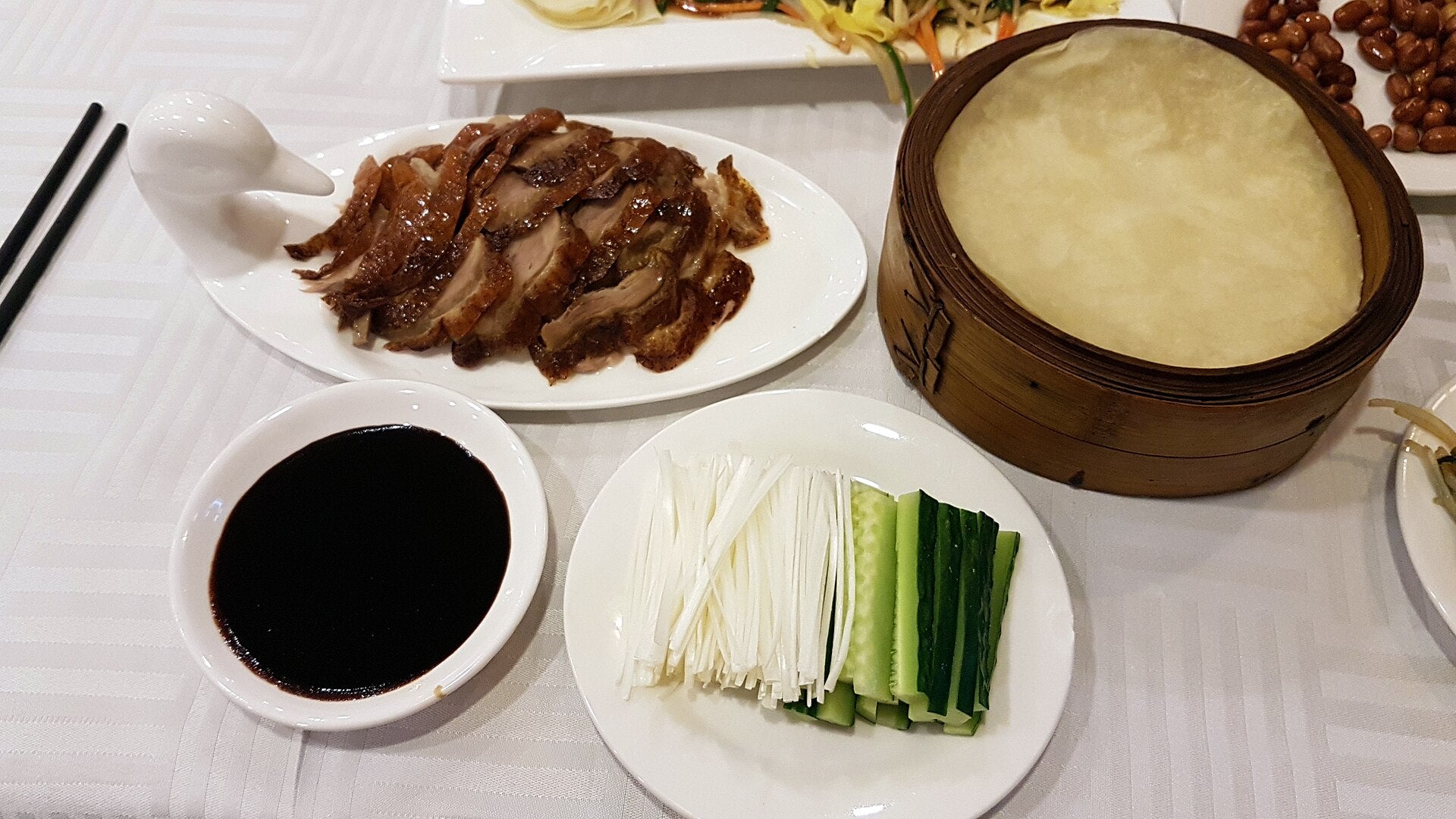
Beijing roast duck (北京烤鸭) works best as a considered meal, with time to understand the accompaniments and share the experience. Ask about portion size, how the duck is served and which additional dishes suit the group. A famous name is not automatically the right choice for every budget, location or dietary requirement.
Plan the meal around your route rather than crossing the city only for a photograph. Confirm reservation conditions, expected waiting and payment options with the chosen venue. If a proposal includes food, ask whether the main meal, drinks and additional orders are covered. Do not assume unlimited ordering or a particular restaurant unless it is expressly agreed.
3. Noodles, dumplings and smaller tastes
Zhajiangmian (炸酱面), commonly described as noodles with a savoury sauce, can offer a different scale of meal from roast duck. Dumplings and selected snacks can also fit a route when they contribute something distinct. The filling, sauce and preparation matter more than a generic English label.
A tasting plan should account for appetite and timing. Leave space for the main meal, avoid ordering a large portion at every stop and ask which tastes can be shared. For travellers who prefer familiar food, a gentle introduction may be more enjoyable than an ambitious sequence. Trying something new should remain a choice, not a requirement to prove adventurousness.


4. Choose neighbourhoods with a clear purpose
Qianmen and Dashilar can connect food with a historical commercial setting. Niujie (牛街) offers another dining context to investigate, while contemporary areas can support a different style of meal. These are route ideas, not blanket guarantees about individual kitchens, certification or access.
Do not assume that a neighbourhood name proves a restaurant meets your dietary requirements. Ask the specific business about ingredients, preparation and any certification you need. If the answer is uncertain, choose a different meal rather than relying on a guide's guess. A useful route can remain enjoyable even when one proposed restaurant is unavailable.
5. Explain allergies and dietary needs precisely
Tell your organiser before planning, then confirm with the actual food provider. Name the ingredient and explain whether cross-contact matters; a general request such as no spicy food or vegetarian may not communicate the whole requirement. Keep a clear translated statement available and do not assume that removing a visible ingredient removes it from sauces or preparation.
For severe allergies or other medical dietary needs, seek advice appropriate to your situation and do not rely on a tour description as a safety guarantee. This article does not assess an individual restaurant's ability to manage allergens. If reliable confirmation cannot be obtained, the route should change. Carry any prescribed medication according to your clinician's instructions and current travel rules.
6. What a clear food proposal should say
- Which meals or tastes are planned, and which are optional?
- Are venue names confirmed or still proposed?
- What dietary requirements have been communicated?
- Are drinks, extra dishes and service costs included?
- What is the alternative if a venue is unavailable?
- How does the food schedule fit transport and sightseeing?
Food costs should not be hidden inside vague phrases such as local experience. Confirm the agreed scope and price in writing. A strong food journey combines meaningful context, enough time to eat and sensible logistics; it does not need to promise the city's best restaurant or a guaranteed behind-the-scenes demonstration.
Questions & Answers
Is all food included in a food-focused journey?
Only the meals or tastings itemised in the proposal. Drinks, extra dishes, optional stops and other costs should be stated clearly before confirmation.
Can the itinerary suit vegetarians or allergies?
It can be planned around stated requirements, but each food provider must confirm ingredients and preparation. Severe allergies require particular care; no blanket safety guarantee is made.
Do you guarantee a particular restaurant?
Not unless a specific arrangement has been confirmed. Opening conditions, menus and tables can change, so the proposal should distinguish confirmed venues from alternatives.
Official Sources & Updates
Official pages were checked on the date shown. Entry rules, reservations, service terms and operating conditions can change. Recheck the relevant authority or provider before travel; this guide does not determine entry eligibility or guarantee access.
- Beijing official food guide: autumn dishes (Checked 2026-10-04)
- Beijing International Web Portal: travel essentials (Checked 2026-10-04)
About the Photography
These are independent, openly licensed archive photographs. They are not Jingbound guest photographs and do not guarantee current weather, crowds, menus or services. Photo source and licence links accompany the images.
Anagoria · CC BY 3.0 · Roast duck and accompaniments photographed at a Beijing restaurant · Archive photo · resized; layout may crop