

Plan Your Stay
How Many Days in Beijing? Choose a Stay That Fits
From three hours to seven days: understand what different lengths of stay can realistically support.
The Short Answer
One usable day supports a focused city story. Two days can separate city heritage from a suburban outing. Three to four days create room for major sights and a personal interest; five to seven allow slower exploration and alternatives. These are planning suggestions, not guaranteed schedules.
1. Count usable days, not hotel nights
Three hotel nights do not always mean three sightseeing days. Arrival time, departure time, airport transfers and recovery from the flight can remove a large part of the first and last days. Begin by listing the hours when you can comfortably be away from the hotel. Then identify any fixed meetings, meals or onward travel.
A better planning question is: how many full days and smaller windows do I actually have? A three-hour window can be valuable for a focused experience, but it is not a miniature full-city tour. A departure afternoon is not automatically a spare Great Wall day. Count transfers and luggage handling honestly before comparing itinerary lengths.
2. Three hours or one day: choose a clear theme
For three hours, choose one area or a coherent interest: a neighbourhood walk, a food-focused introduction or a short architectural perspective. The value comes from interpretation and attention, not the number of stops. Do not try to combine opposite sides of the city in a short window.
For one day, choose a primary anchor and one compatible second experience. A Palace Museum-focused day, for example, may include a nearby perspective after a meal if admission, opening conditions and your energy allow. A garden-focused day can spend longer at the Summer Palace instead of adding unrelated landmarks. The full-day product should offer greater depth than a three-hour route, not simply more hurried photographs.
3. Two days: give different stories their own space
Two days can support a useful contrast: an urban cultural day and a Great Wall outing, or imperial heritage followed by gardens and contemporary Beijing. The Great Wall requires suburban transport and should not be treated as a quick stop between city museums. Check the current visitor conditions through the Mutianyu Great Wall: official visitor information if considering Mutianyu.
For a traveller who does not want the Wall, two city days can be richer than an obligatory excursion. Use one for the major historical question you care about and the other for an interest such as design, food or landscape. Keep the sequence flexible around confirmed reservations rather than declaring that one fixed order suits everyone.


4. Three to four days: build a balanced first visit
With three usable days, think in three layers: a major heritage experience, a contrasting landscape or suburban day, and a personal interest. Four days add space for a second major place, a slower morning or a weather contingency. These are different products: a four-day route should explain what the extra day contributes instead of simply stretching a three-day plan.
Possible themes include imperial architecture and city history, gardens and built landscapes, or food and contemporary creativity. Check opening days before assigning dates. The Palace Museum: official visiting guidance explains the Palace Museum's normal Monday closure outside statutory holidays and its visiting arrangements. Confirm specific notices for your travel dates rather than assuming all named areas will be open.
5. Five to seven days: deepen the experience, not the checklist
A longer stay creates room to return to a theme from another angle. A heritage trip can compare ceremonial spaces, gardens and smaller museums. A contemporary-city trip can connect industrial reuse, design and neighbourhood change. A family trip can alternate a major outing with a shorter day and time to rest.
Do not fill every morning and evening just because you have more days. Put physically demanding outings between easier days, choose a hotel base that works across the plan and leave some meals unprogrammed. Optional excursions should be identified as optional, with separate feasibility and costs. A seven-day proposal is strongest when each day has a reason to exist and the whole week still feels comfortable.
6. Choose according to interest and tolerance
Start with three questions: which places or subjects matter most, how much walking is comfortable, and how much uncertainty can your schedule absorb? Photography may require waiting for light; families may need predictable meal breaks; museum lovers may prefer fewer venues and longer visits. None of these preferences is solved by adding more destinations.
- Short stay: choose a theme and minimise transfers.
- First visit: balance a major sight with a different perspective.
- Repeat visit: replace familiar icons with specific interests.
- Family stay: build around the least flexible traveller's rhythm.
- Long stay: keep an alternative day and room for independent time.
Browse the existing journeys by duration, then use your interests to refine the choice. The proposed route, inclusions, reservations and final price must be confirmed for your group.
Questions & Answers
Is one day enough for Beijing?
It can be enough for one focused introduction, but not for a comprehensive city visit plus the Great Wall. Choose what you most want to understand and keep the route geographically coherent.
Should every first visitor go to the Great Wall?
Only if it matches your interests, available time and physical comfort. It is a separate outing with transport and visitor arrangements, not a compulsory ingredient in every route.
Are three-day and four-day journeys the same itinerary?
They should not be. A four-day route should have a distinct additional experience or a clearly explained pacing advantage. Compare the actual day-by-day proposal, not just the duration label.
Official Sources & Updates
Official pages were checked on the date shown. Entry rules, reservations, service terms and operating conditions can change. Recheck the relevant authority or provider before travel; this guide does not determine entry eligibility or guarantee access.
- Palace Museum: official visiting guidance (Checked 2026-10-04)
- Mutianyu Great Wall: official visitor information (Checked 2026-10-04)
- Beijing official transport directory (Checked 2026-10-04)
About the Photography
These are independent, openly licensed archive photographs. They are not Jingbound guest photographs and do not guarantee current weather, crowds, menus or services. Photo source and licence links accompany the images.
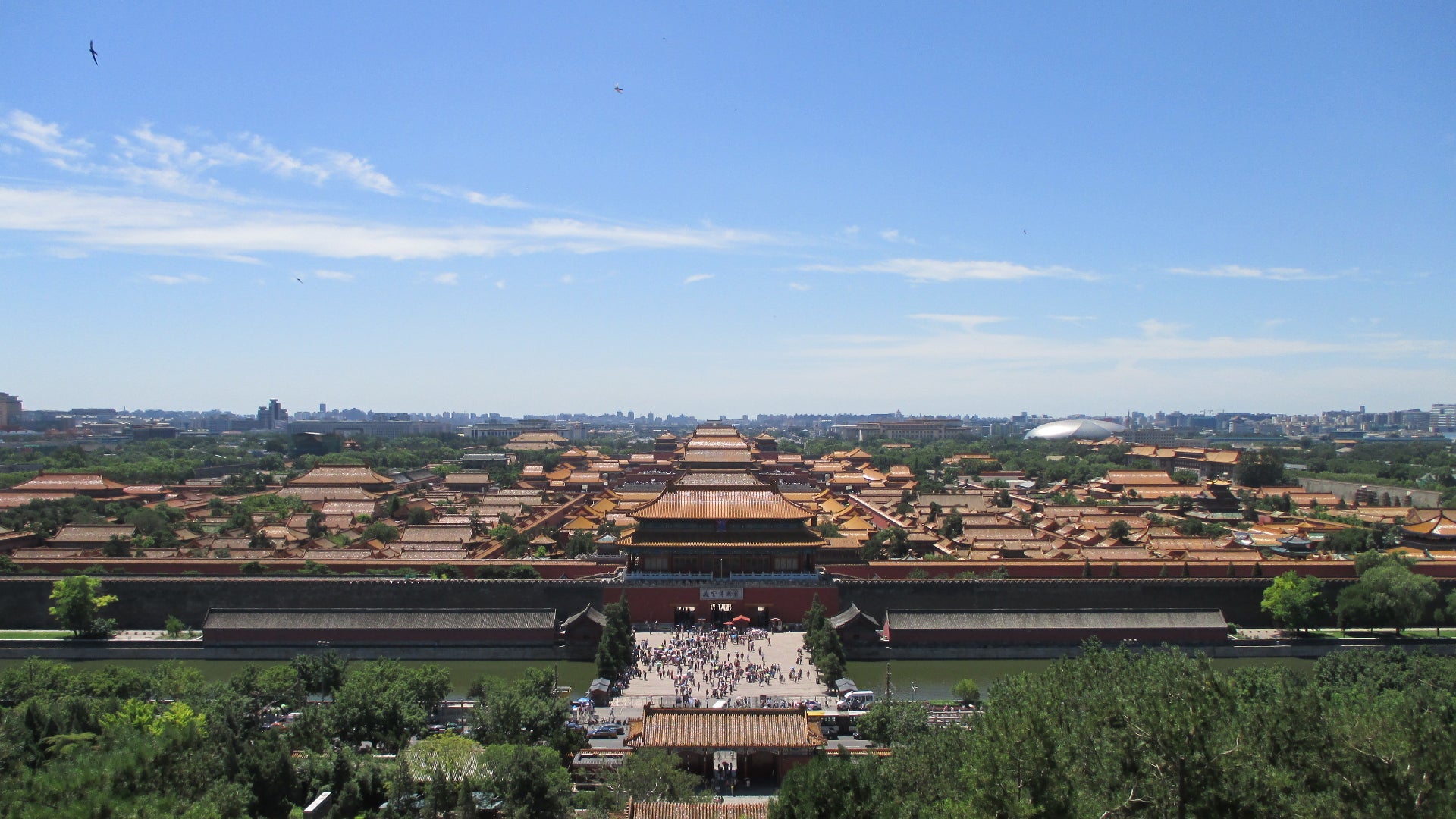
Tojan76 · CC BY-SA 3.0 · The Forbidden City viewed from Jingshan, Beijing · Archive photo · resized; layout may crop